Silence in Conversations #
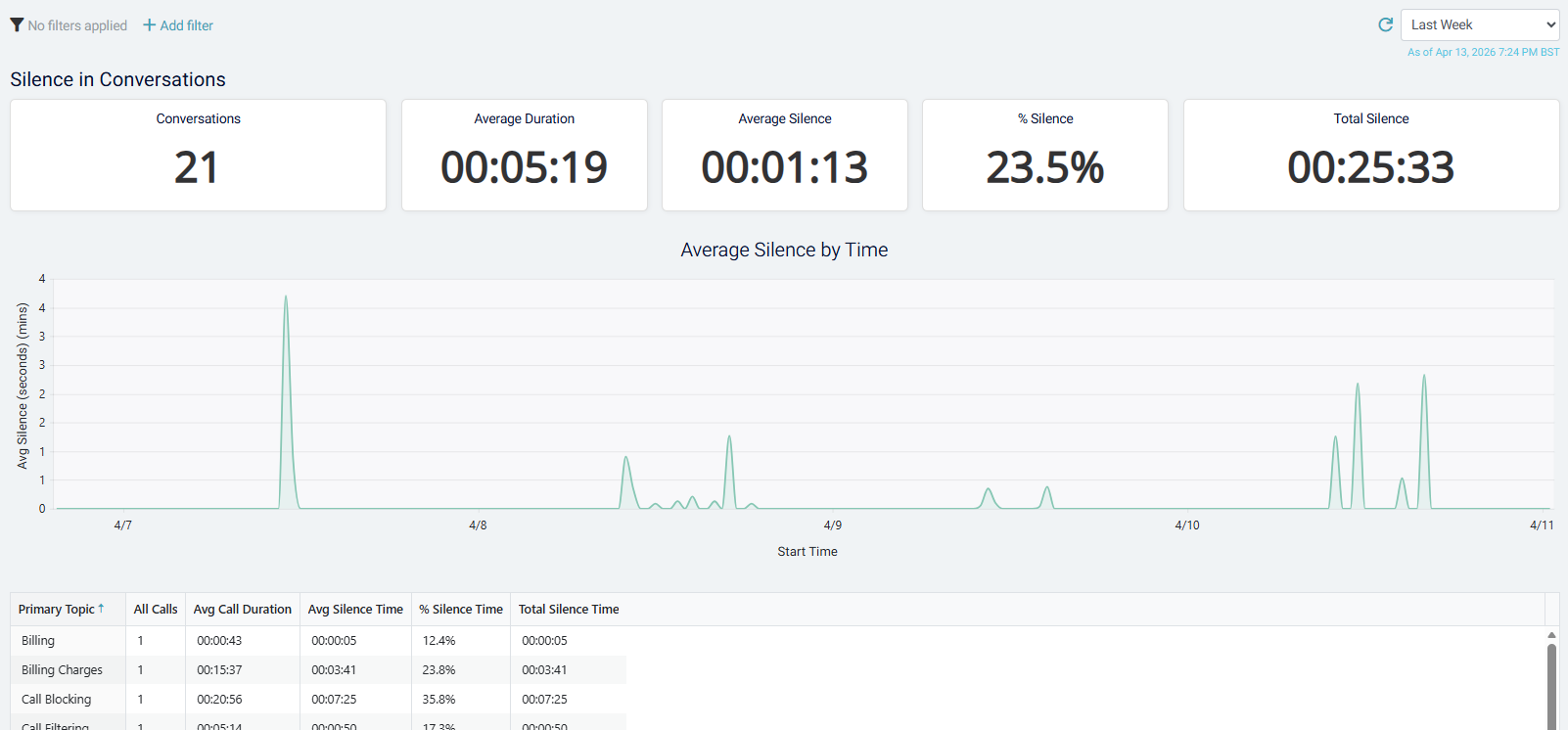
The Silence in Conversations view analyses periods where neither party is speaking during a call. While some silence is natural — a user looking up an account, or a brief pause while a customer thinks — excessive or poorly timed silence can be a significant indicator of problems with call handling, agent confidence, or process efficiency.
Why Silence Matters #
Silence analysis provides a layer of insight that transcription and sentiment alone cannot. A call can have polite language and positive sentiment, yet still contain long periods of silence that signal friction, hesitation, or process failure.
Identifying handling issues — extended silences often indicate that a user is unsure how to proceed, is searching for information they should have readily available, or is navigating a system inefficiently. Spotting these patterns across many calls helps identify where agents may need additional training or where tooling and processes could be improved.
Measuring dead air — customers experience silence negatively, particularly when it is unexpected or unexplained. High levels of dead air in your calls can damage customer perception of the interaction even when the eventual outcome is positive. Tracking silence over time gives you a measurable indicator of call quality beyond what customers say.
Coaching opportunities — silence at specific points in a call — such as at the opening, after a question, or before closing — can reveal gaps in confidence or knowledge. Reviewing calls with high silence alongside transcriptions and sentiment gives coaches concrete, evidence-based content for one-to-one feedback sessions.
Benchmarking and trending — by monitoring average silence duration over time, you can evaluate whether changes to scripts, training, or tooling are having a positive effect on call fluency. A reduction in silence following a training intervention is a clear signal that it has worked.
Spotting process bottlenecks — silence that consistently occurs at the same point in conversations — for example, while a user is placing a customer on hold to consult a colleague, or waiting for a slow system to respond — can indicate a systemic issue rather than an individual performance problem.