Topic Analysis #
Topic Analysis automatically identifies the subjects being discussed across your calls. Rather than relying on manually tagged data or keyword searches, topics are extracted directly from the transcription by AI — surfacing what is actually being talked about, even when you did not know to look for it.
How Topics are Generated #
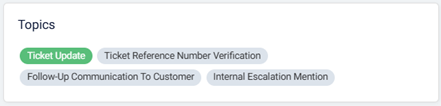
After a call is transcribed, the AI reads the full conversation and identifies the dominant subject being discussed, assigning it as the 'Primary Topic' for the call. If the conversation covers more than one distinct subject, a second topic is also assigned to capture the additional theme.
Topics are expressed in natural language rather than rigid categories, so they reflect the actual content of the call. Two calls about the same underlying issue will typically generate similar topic descriptions, even if the wording of the conversations was different.
Topic Clusters #
When looking at topics across a large number of calls, the variety of natural language used means that similar topics can be expressed in slightly different ways. For example, 'request for refund', 'asking about a refund', and 'refund query' all represent the same underlying theme.
Topic Clusters group these related topics together automatically, so that patterns across calls become visible at a higher level. Instead of seeing hundreds of individually worded topic tags, you see clusters of related topics — making it much easier to understand what themes are driving call volume.
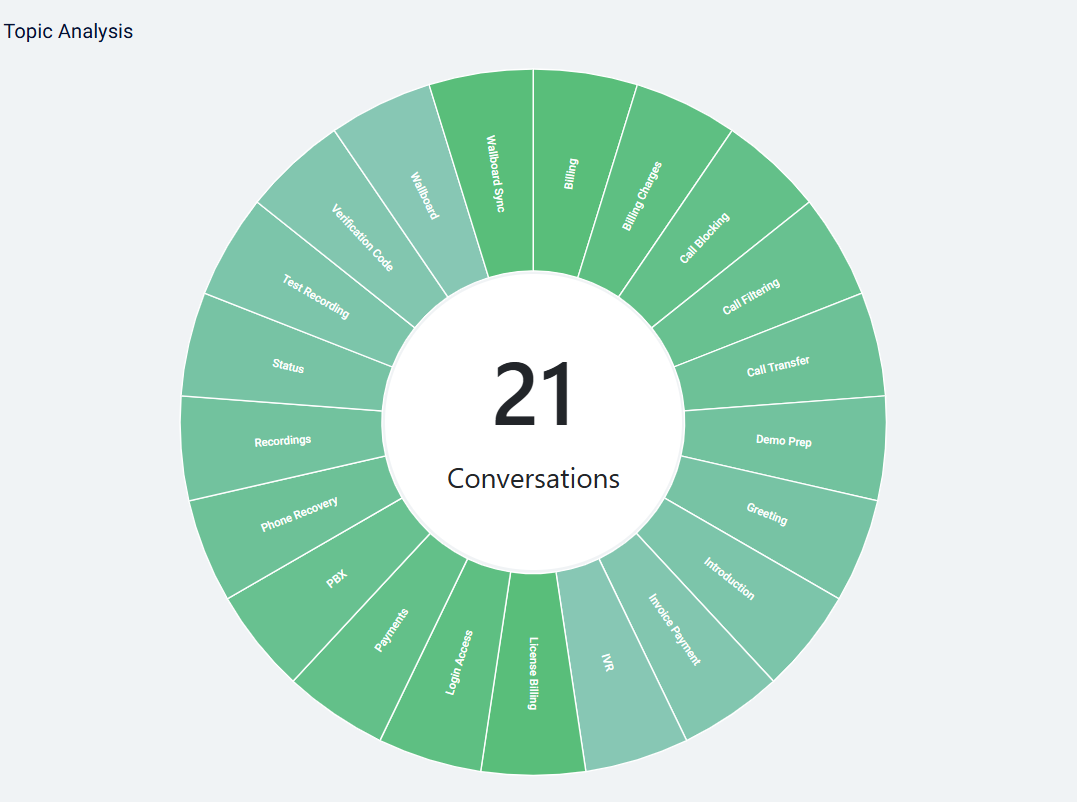
Clicking on a cluster in the Topic Analysis view shows the individual calls that contributed to it, allowing you to drill down and review specific conversations that are representative of that theme.
info
Topic clusters are regenerated weekly, producing up to 12 clusters. It may take time for newly emerging themes to form their own cluster as enough calls accumulate around a topic.
Using Topic Analysis #
Topic Analysis is most useful for identifying patterns that are not immediately obvious from individual call review. Some practical ways to use it:
Spotting emerging issues — a sudden increase in calls clustering around a topic like 'website not loading' or 'billing error' can indicate a problem that needs attention before it escalates.
Understanding call drivers — seeing which topics account for the highest call volumes helps prioritize where to focus improvements — whether in self-service, agent training, or product changes.
Informing training — topics that appear frequently alongside negative sentiment can indicate areas where agents need more support or where scripts need to be revised.
Validating changes — after making a product, process, or communication change, topic analysis can confirm whether related call volumes have shifted as expected.