Sentiment Analysis #
Sentiment Analysis measures the tone of a conversation — whether the language being used is positive, neutral, or negative. Rather than giving a single score for the whole call, ~.Dimensions.~ tracks sentiment separately for the customer and the user, and follows how it changes throughout the conversation.
How Sentiment is Measured #
After a call is transcribed, the AI evaluates the language used by each speaker across the conversation. Words, phrases, and patterns of speech are assessed to determine whether the tone at each point in the call is positive, neutral, or negative.
Because sentiment is tracked progressively through the call rather than as a single average, you can see how the mood of both parties evolved — not just where it ended up. A call that started with a frustrated customer but ended positively tells a very different story to one that remained negative throughout.
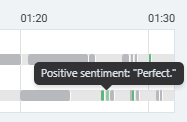
Sentiment is displayed on the call timeline in the conversation view, color-coded to make it easy to read at a glance.

Customer Sentiment vs User Sentiment #
Tracking both sides of the conversation independently is important because each tells a different story:
Customer sentiment reflects how the customer is feeling throughout the call. A shift from negative to positive typically indicates that the issue was resolved well. Sustained negative sentiment, particularly near the end of a call, may indicate a poor outcome or an unresolved issue.
User sentiment can indicate how confidently and positively a user is engaging with the customer. Consistent neutral or professional language is generally a good sign, while sharp dips may be worth reviewing.
Comparing the two can surface useful patterns — for example, calls where customer sentiment improved but user sentiment dipped may indicate that a resolution was reached but the user found the call difficult.
Using Sentiment Analysis #
Identifying calls for review — use sentiment to quickly surface calls that ended on a negative note and may need a follow-up or quality review.
Measuring the impact of changes — if a new script, process, or training program is introduced, tracking average customer sentiment over time is a straightforward way to measure whether it is having a positive effect.
Coaching — user sentiment data can be used in coaching conversations to provide objective context alongside call recordings, helping users understand how their tone comes across on difficult calls.
Combining with other CI data — sentiment is most powerful when combined with other signals. A call with negative customer sentiment that also triggered a keyword like 'cancel my account' is a much stronger indicator of churn risk than either signal alone.
Sentiment data is available as a filter and field in reports, and is also one of the criteria available when configuring Scorecards.